Compared With What?
My mother picked up my ON protein powder and read the label.
Cholesterol: 55 mg. 18% Daily Value.
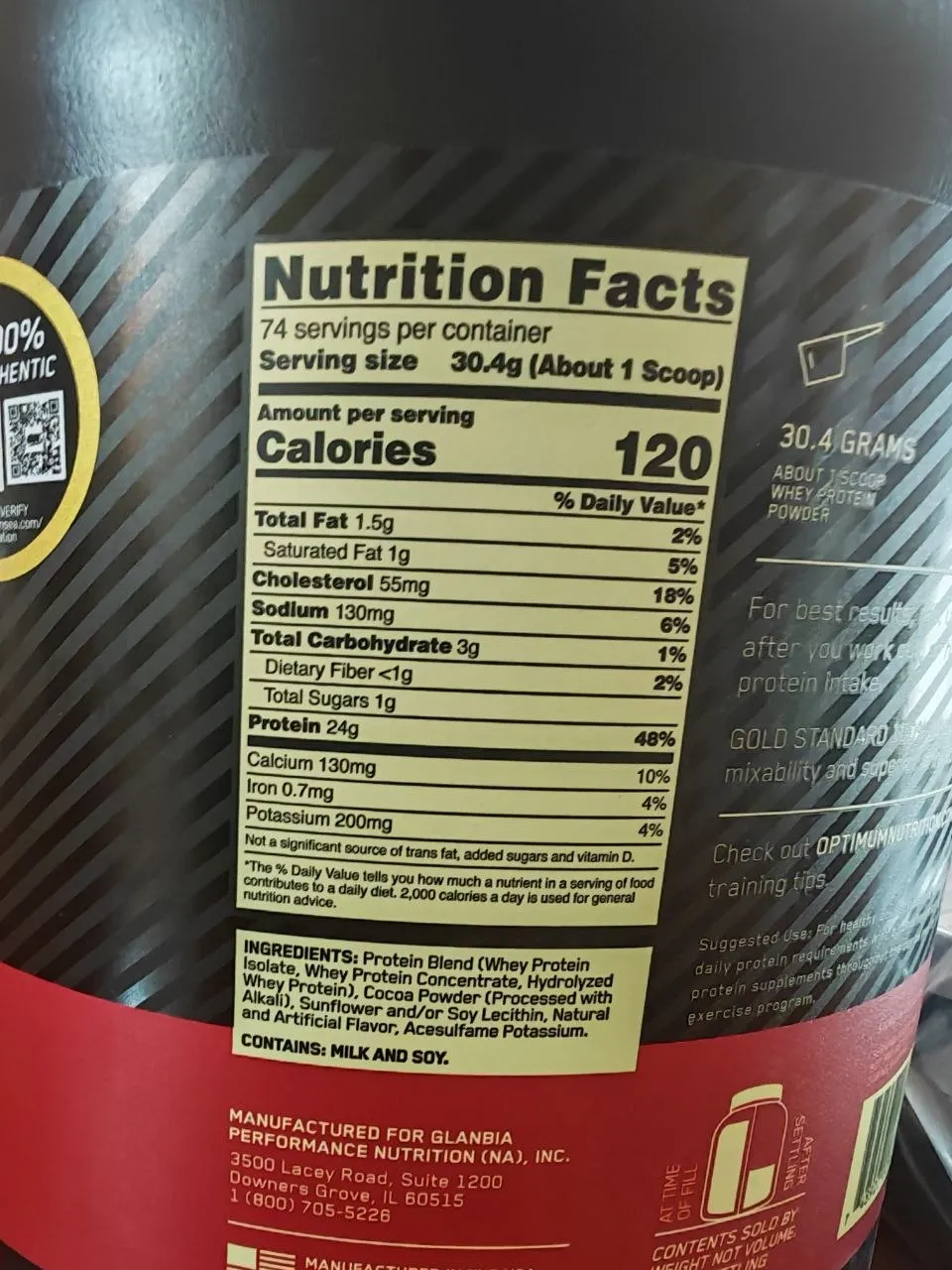
She was worried. I almost reached for the opposite shortcut: tell her that one number on a protein tub could not decide whether the powder was good or bad.
That sounded smarter. It still was not the question.
My mother had the tub. I had a better-sounding answer. Neither of us had got to the question yet.
The label says 55 mg in one 30.4 g scoop. It tells me what is in that scoop. It does not hand me the conclusion.
Then I noticed how often I do the same thing with research.
“Eggs are high in cholesterol.”
“This vitamin works.”
“Salmon is good for you.”
The sentence might be true. I still might only understand the 表面.
The easy part is the number, chart, or clean good-or-bad conclusion. The harder part is what that result was actually answering: compared with what, for whom, for which outcome, and under what conditions?
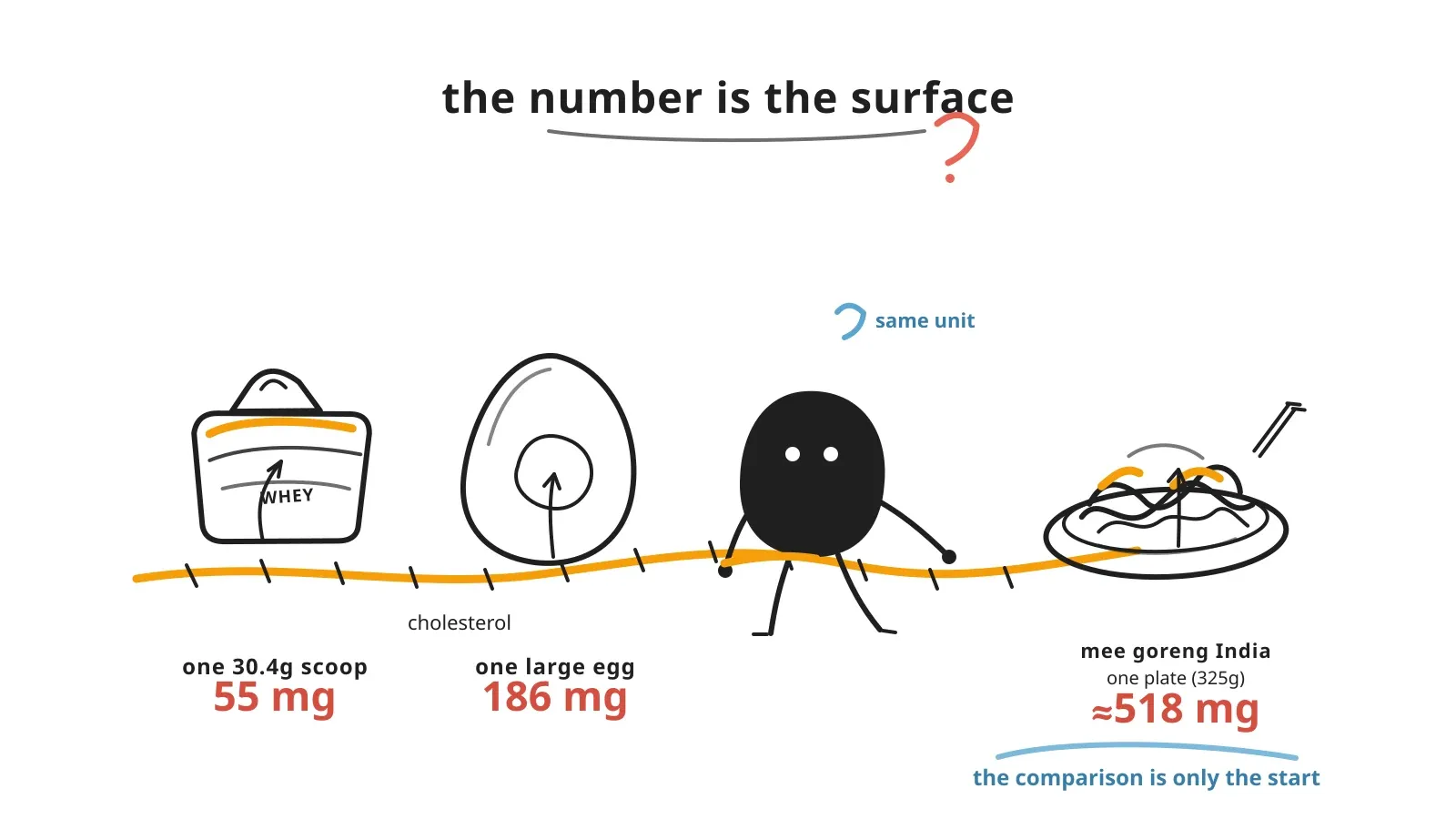
A study does not simply say that something is good. It studies a particular group of people, against a particular comparison, for a particular outcome, over a particular amount of time. Remove those details and the result becomes much easier to repeat. It also becomes easier to misunderstand.
A KOL post does not need to invent a lie. It can take the useful part of a result, make it big, and let the conditions disappear. That is the 避重就轻 part.
A paper becomes a carousel. The carousel becomes a caption. The caption becomes “this works.”
By then, the sentence may still be technically true. It is just no longer the whole thing.
I used to have a lazy reaction to sponsored research too. If a company paid for it, then obviously the result would favour the company. That is another surface-level answer. Funding is a reason to read more carefully. It is not a substitute for reading.
Now I try to stop before repeating the conclusion and ask a more annoying question: compared with what?
If I cannot answer that, I probably only know the surface.